The origins of interlocking pavers can be traced back to the Ancient Romans, dating back over 2000 years. Seeking to construct roads using simple materials and methods, the Romans inadvertently created a system of road building that has endured for millennia, finding its way into countless homes and properties to this day.
Interlocking pavers, whether crafted from stone or concrete, present an exceptional landscaping solution for both residential and commercial applications.
Durable, dependable, and requiring minimal maintenance, interlocking pavers stand as a formidable alternative to traditional paving and landscaping options available today. Available in a plethora of styles, they serve to enhance the aesthetic appeal of properties, elevate curb appeal, and augment property values.
Before delving into their benefits, let’s first examine what precisely interlocking pavers entail.
What Are Interlocking Pavers?
At its core, the term ‘interlock’ denotes the connection of two parts in a manner that restricts the movement of either part.
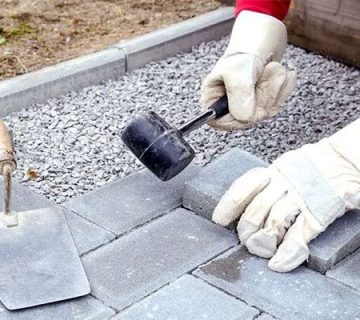
Interlocking pavers, as the name implies, constitute a type of paving material, typically fashioned from cement or concrete, that is interconnected through a combination of pavers, bedding sand, edge restraint, and/or joint sand.
This unique interlocking mechanism facilitates straightforward installation without the necessity of mortar. When installed correctly, this amalgamation forms a cohesive unit, imbuing it with strength and longevity.
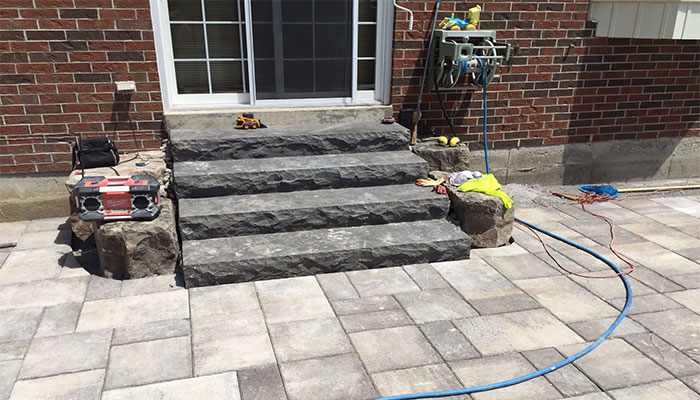
Interlocking pavers come in a myriad of hues and patterns, lending themselves to modular arrangements that enable the creation of stunning geometric designs.
How Do Interlocking Pavers Function?
When sand fills the interlocking joints, it serves to secure the pavers in two fundamental ways.
Firstly, the small indentations and crevices in the pavers interlock via friction, with the minute gaps effectively ‘melding’ the paving stones together. The introduction of sand into these crevices further augments the friction between the pavers.
Secondly, when compacted adequately, the sand itself becomes tightly packed. Consequently, the sand not only facilitates the cohesion of the pavers but also consolidates the sand particles, rendering them immobile without significant force.
Once the entire structure is encompassed, it coalesces into a unified entity, despite the absence of direct contact between the paving stones across their entire surface area.